
Quick Summary:
- Foul Odours: Strong or persistent smells around the kitchen drain or interceptor can indicate accumulated grease and food waste.
- Slow Drainage: Sinks and floor drains that empty slowly may signal grease buildup or restrictions within the drainage system.
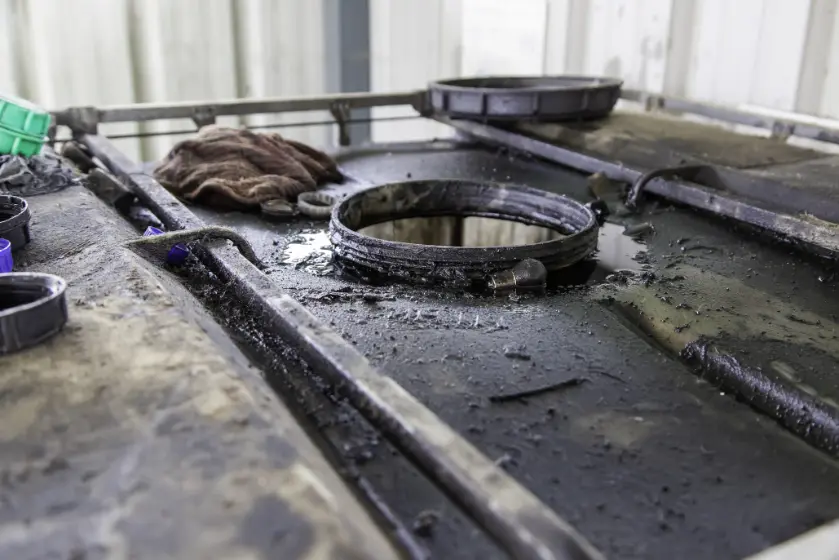
- Visible Grease Buildup: A thick layer of grease inside the interceptor means its capacity may be reduced and servicing may be required.
- Repeated Blockages: Frequent kitchen drain blockages can indicate poor commercial kitchen drainage maintenance or excessive grease accumulation.
- Wastewater Backup: Water backing up from sinks or floor drains is a serious warning sign that requires prompt attention. Regular FOG management can help reduce these risks in Malaysian commercial kitchens.
What Is a Grease Interceptor?
A grease interceptor is an important part of a commercial kitchen drainage system. It is designed to separate fats, oils and grease, commonly known as FOG, from wastewater before the wastewater continues into the drainage network.
As kitchen wastewater enters the interceptor, heavier food solids can settle while grease and oils separate from the water. Over time, however, the collected grease and solids build up.
If the interceptor is not cleaned or inspected regularly, it may eventually lose its effectiveness. Grease can move further into the drainage pipes, contributing to restrictions, unpleasant odours and wastewater backup.
For restaurants and other food businesses, commercial kitchen grease management should therefore be treated as part of normal kitchen maintenance rather than something that only needs attention when a blockage occurs.
1. Strong and Unpleasant Odours
One of the first signs of a grease interceptor problem is a persistent unpleasant smell.
As fats, oils, grease and food particles accumulate inside the interceptor, organic material can break down and produce strong odours. You may notice the smell around the interceptor, kitchen sink, floor drain or nearby service areas.
A temporary smell may not always indicate a serious problem. However, if the odour becomes stronger or continues even after normal cleaning, it is worth checking the interceptor.
For Malaysian food businesses, controlling unpleasant smells is important for both staff comfort and customer experience.
Commercial kitchen hygiene should cover more than food preparation areas. Drainage systems, grease interceptors and waste handling areas also require regular attention.
2. Kitchen Sinks Are Draining Slowly
Another common warning sign is slow drainage.
If water takes longer than usual to drain from kitchen sinks, grease may be accumulating inside the interceptor or connected pipework.
This problem can become particularly noticeable during busy periods. When several sinks, dishwashing areas and kitchen equipment are operating at the same time, a restricted drainage system may struggle to handle the increased flow.
Slow drainage should not simply be treated with temporary drain-cleaning solutions. The underlying cause should be identified.
Regular kitchen drainage maintenance can help businesses identify grease accumulation before it causes a complete blockage.
3. There Is Visible Grease Buildup
If you inspect the interceptor and notice a thick layer of grease floating on the surface, it may be time for servicing.
Grease naturally accumulates because interceptors are designed to capture it. The problem occurs when the accumulated material becomes excessive.
Once too much grease and solid waste collect inside the unit, there is less effective capacity available to capture additional FOG.
Current Malaysian industry guidance commonly recommends monitoring grease and solids accumulation rather than relying only on a fixed calendar schedule. Some service guidance uses a 25% accumulation threshold as an indicator that cleaning frequency should be increased.
This makes regular inspection useful, especially for kitchens with high cooking volumes.
4. Wastewater Starts Backing Up
Wastewater backing up through a sink or floor drain is a more serious warning sign.
A buildup of grease and food solids can restrict the flow of wastewater. If the restriction becomes severe, water may start flowing backwards into the kitchen.
This can quickly affect normal business operations.
For example, staff may have difficulty washing utensils, cleaning equipment or maintaining normal food preparation activities. Standing wastewater can also create hygiene concerns.
Drain blockage prevention is therefore much better than waiting until wastewater has already entered the kitchen.
If wastewater is backing up repeatedly, the interceptor and connected drainage system should be inspected to determine the actual cause.
5. Kitchen Drains Keep Getting Blocked
A single blockage may have many possible causes. Repeated blockages, however, are a strong reason to investigate the grease management system.
If staff regularly need to clear blocked sinks or floor drains, there may be excessive grease accumulation inside the interceptor or downstream pipework.
Simply removing the blockage may solve the immediate problem, but it does not necessarily address why the blockage happened.
Professional grease trap cleaning services can help remove accumulated grease and solids while allowing the condition of the interceptor and relevant components to be checked.
A recurring blockage shortly after cleaning may also indicate that the interceptor was not cleaned thoroughly or that another drainage problem exists.
6. Grease Appears in Downstream Drains
A properly functioning interceptor should capture a significant amount of grease before wastewater continues into downstream drainage.
If grease deposits are appearing beyond the interceptor, it is worth investigating.
Possible causes can include excessive grease accumulation, an unsuitable maintenance schedule, damaged internal components or an interceptor that is not performing properly.
Industry guidance also identifies grease appearing in downstream cleanouts as a reason to review and potentially increase cleaning frequency.
This is why businesses should not focus only on the interceptor itself. The connected drainage system also needs attention.
7. The Interceptor Has Not Been Inspected for a Long Time
Sometimes there are no obvious warning signs.
A grease interceptor can continue to operate for some time while grease and solids gradually accumulate inside. By the time staff notice an odour or drainage problem, the buildup may already be significant.
For this reason, planned inspection is an important part of preventive maintenance for commercial kitchens.
The ideal maintenance frequency depends on several factors, including:
- Kitchen size
- Daily cooking volume
- Type of food prepared
- Amount of frying and oil use
- Number of meals prepared
- Interceptor capacity
- Previous grease accumulation rate
A high-volume restaurant will generally require more frequent attention than a small café with limited cooking.
Why Grease Interceptor Maintenance Matters in Malaysia
Malaysia has a large and active food and beverage sector, including restaurants, cafés, food courts, hotels, catering businesses, central kitchens and commercial canteens.
These businesses can generate significant quantities of fats, oils and grease during daily operations. Without proper FOG management, grease can accumulate inside interceptors and drainage pipes.
Industry sources in Malaysia highlight regular cleaning and maintenance as important for reducing clogging, odour and wastewater problems.
Proper maintenance can also support better wastewater management and reduce the likelihood of unexpected kitchen disruption.
Rather than waiting until the drainage system fails, businesses can monitor the interceptor and arrange servicing according to actual usage and accumulation.
What Can Happen If Maintenance Is Ignored?
Ignoring early warning signs can turn a manageable maintenance issue into a larger drainage problem.
Potential consequences include:
- Persistent foul odours
- Slow kitchen drainage
- Recurring pipe blockages
- Wastewater overflow
- Disruption to kitchen operations
- Increased cleaning costs
- Emergency drainage work
- Poor kitchen hygiene
- Potential compliance concerns
A blocked drainage system can be particularly disruptive during busy lunch or dinner periods when the kitchen cannot afford downtime.
That is why preventive grease trap maintenance is generally more practical than relying entirely on emergency cleaning.
How Can Malaysian Businesses Reduce Grease Buildup?
Professional servicing is only one part of effective grease management. Kitchen staff can also help reduce the amount of FOG entering the drainage system.
Businesses should avoid pouring cooking oil, fats and grease directly into sinks. Food particles should be removed from plates, cookware and equipment before washing.
Sink strainers should also be kept clean so that larger food solids do not enter the drainage system unnecessarily.
Staff training is another useful step. Employees should understand what should and should not go into kitchen drains.
Maintaining a simple service record can also help businesses identify patterns. Record inspection dates, cleaning dates, grease accumulation and any drainage problems.
Over time, these records can help determine a more suitable maintenance schedule for the individual premises.
When Should You Arrange Professional Servicing?
If you notice foul smells, slow drainage, visible grease buildup, recurring blockages or wastewater backup, do not wait for the problem to become worse.
Professional maintenance can include removing accumulated grease and solids, cleaning the interceptor, inspecting internal components and checking the overall condition of the system.
For businesses that require a planned approach, you can learn more about the available grease interceptor maintenance service and see how professional servicing can support your kitchen drainage system.
The exact servicing frequency should depend on the actual conditions of the interceptor and the volume of grease produced by the kitchen.
What Should a Professional Service Include?
A proper service should go beyond simply removing visible grease from the surface.
Depending on the type and condition of the interceptor, professional servicing may involve:
- Inspecting the interceptor and access area
- Removing accumulated grease
- Removing settled food solids and sludge
- Cleaning internal surfaces
- Checking inlet and outlet areas
- Inspecting baffles or other internal components
- Checking for signs of damage
- Cleaning the surrounding service area
- Recording service findings
- Recommending an appropriate maintenance schedule
Recent Malaysian industry guidance also emphasises inspection of baffles, inlet and outlet components and maintaining service records as part of proper grease trap servicing.
This approach can provide businesses with a clearer picture of the condition of their interceptor rather than simply treating the immediate symptom.
Grease Interceptor Maintenance vs Emergency Cleaning
There is an important difference between planned maintenance and emergency cleaning.
Planned maintenance allows businesses to inspect and clean the interceptor before grease accumulation causes a major problem.
Emergency cleaning usually happens after a blockage, overflow or severe odour has already affected the premises.
For a busy commercial kitchen, planned drainage system maintenance can be easier to manage because servicing can be scheduled around operating hours and business requirements.
It can also reduce the likelihood of unexpected disruption during peak periods.
Keeping Your Grease Interceptor in Good Condition
A grease interceptor provides an important role in helping commercial kitchens manage fats, oils, grease and food-related wastewater. However, it cannot work effectively if excessive grease and solids are allowed to accumulate.
Strong odours, slow drainage, visible grease, repeated blockages, wastewater backup and grease appearing in downstream drains are all warning signs that should not be ignored.
For Malaysian restaurants, cafés, hotels, food courts and other food businesses, regular Grease Interceptor Maintenance can support better drainage performance, cleaner working conditions and more reliable kitchen operations.
If your business is experiencing any of these warning signs or you want to establish a suitable maintenance routine, you can visit the Contact Us page to discuss your requirements and servicing needs.
FAQs:
1. What are the main signs that a grease interceptor needs maintenance?
The most common signs include foul odours, slow drainage, visible grease buildup, repeated blockages, wastewater backup and grease appearing in downstream drains.
2. How often should a grease interceptor be cleaned in Malaysia?
There is no single frequency that suits every business. Cleaning requirements depend on interceptor size, kitchen activity, cooking volume, food type and the rate at which grease and solids accumulate.
3. Can a grease interceptor cause bad smells?
Yes. Accumulated grease, food particles and organic material can produce unpleasant odours, especially when the interceptor is not cleaned regularly.
4. What happens if a grease interceptor becomes too full?
An overloaded interceptor may become less effective at capturing grease. FOG can then move into downstream pipes, increasing the risk of blockages, slow drainage and wastewater backup.
5. Can kitchen staff prevent grease interceptor problems?
Yes. Staff can reduce problems by keeping food solids out of drains, avoiding pouring cooking oil and grease into sinks, cleaning strainers and following the property’s grease management procedures.
